Method fit

Drone, hybrid, or traditional cleaning decision matrix

Use this page to decide whether a job should be drone-supported, hybrid, traditional, or sent back for more information.

Best forNot forInputs needed
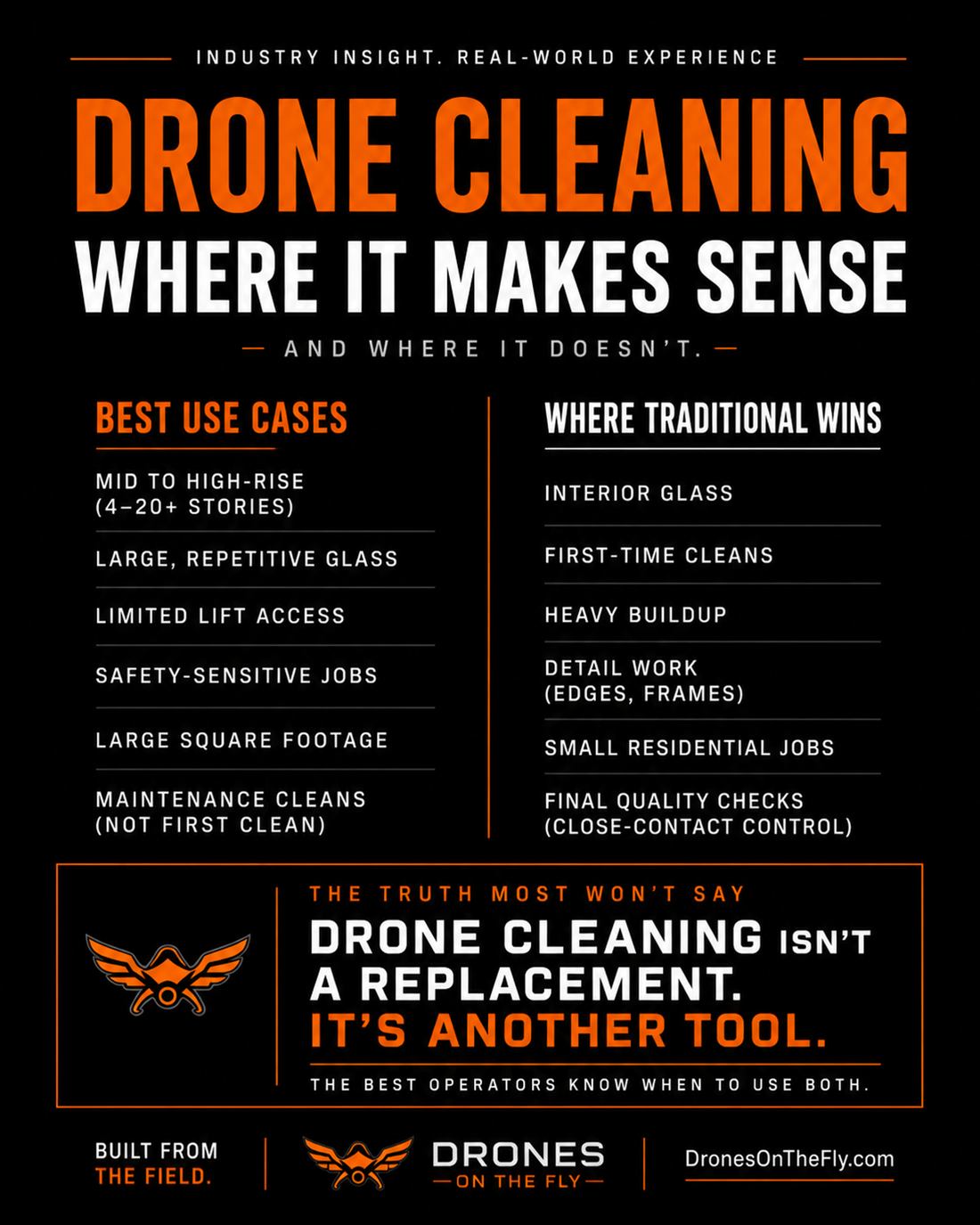
Drone cleaning method fit decision matrix

Decision matrix

Match the method to the surface, access, and finish standard.

The right answer is the one that delivers the result with the least unnecessary risk, disruption, and wasted production time.

Drone-supportedBest for large repeatable exterior surfaces.Good candidates include certain commercial glass, facade panels, solar arrays, warehouses, campuses, and elevated rinse zones where staging is controlled.
HybridBest for main-surface speed plus detail quality.Use drone support for reach and production, then waterfed or hand tools for edges, frames, entrances, heavy buildup, and customer-visible details.
TraditionalBest for close-contact restoration or sensitive areas.Use traditional methods when the surface needs agitation, scraping, restoration, close inspection, interior access, or precise chemical control.

Inputs needed

No method decision without these facts.

If the facts are missing, the correct answer is not to guess. It is to request photos, review access, test water, and clarify the finish expectation.

BuildingHeight, surface material, condition, access.These decide whether the drone can reach, whether the surface can handle the method, and whether staging is realistic.
Water and chemistrySource water, pure water need, runoff, product use.These decide rinse quality, environmental risk, chemical compatibility, and whether aerial application is appropriate.
Customer expectationMaintenance, first clean, restoration, or inspection.These decide whether aerial production is enough or whether a more detailed traditional process is required.

Use the matrix

The best method is the one with the fewest unmanaged risks.

Drone-supported, hybrid, and traditional workflows should be compared against the same facts so the operator is not forcing one tool onto every job.

Drone winsReach, repeatability, lower disruption, and controlled staging.Aerial support is strongest when it saves access time without lowering finish quality.
Hybrid winsLarge surfaces plus detail zones, edges, frames, and entrances.Hybrid work is often the most honest commercial answer.
Traditional winsRestoration, scraping, sensitive surfaces, and close inspection.Some work needs hands, lifts, rope, or specialty restoration methods.

Decision triggers

Use hard stop conditions before a crew mobilizes.

A fit matrix should include stop conditions for weather, people, surface risk, chemical control, water quality, and missing permissions.

Weather stopWind, lightning, freezing surfaces, or poor visibility.A weather delay is cheaper than an unsafe job.
Surface stopUnknown coatings, damaged panels, oxidized paint, or historic material.Test and inspect before scaling the method.
Compliance stopUnclear chemical permission, runoff control, or site authorization.The crew should not improvise around legal or environmental questions.

Method examples

Common job types do not all belong in the same bucket.

Drone cleaning is strongest when it is treated as one method inside a professional exterior cleaning system, not as a replacement for every tool on the truck.

Often drone-readySolar arrays, warehouse walls, large panels, and repeatable rinse zones.Why it fits: large surface area, limited detail points, controlled staging, and production value from aerial reach.
Often hybridCommercial glass, apartment exteriors, campuses, and mixed facade work.Why it varies: the drone can handle reach while poles, brushes, or hand detail finish frames, entrances, heavy buildup, and customer-facing edges.
Often traditionalRestoration, scraping, fragile coatings, interior glass, and heavy close-contact detailing.Why it stops: the job needs contact, inspection, containment, or chemistry control beyond an aerial production pass.

Next step

Make the method decision before quoting or buying.

If the job is real, review the site. If the business plan is real, build around the method mix you expect to sell most often.