Training
Drone Cleaning Training That Protects the Equipment Investment
Flight skill matters, but the job succeeds through water management, site control, chemistry judgment, hose workflow, finish standards, customer communication, and knowing when not to fly.
Built from field experience
Real jobs, not hype
Drone, waterfed, skid, chemistry, and traditional tools
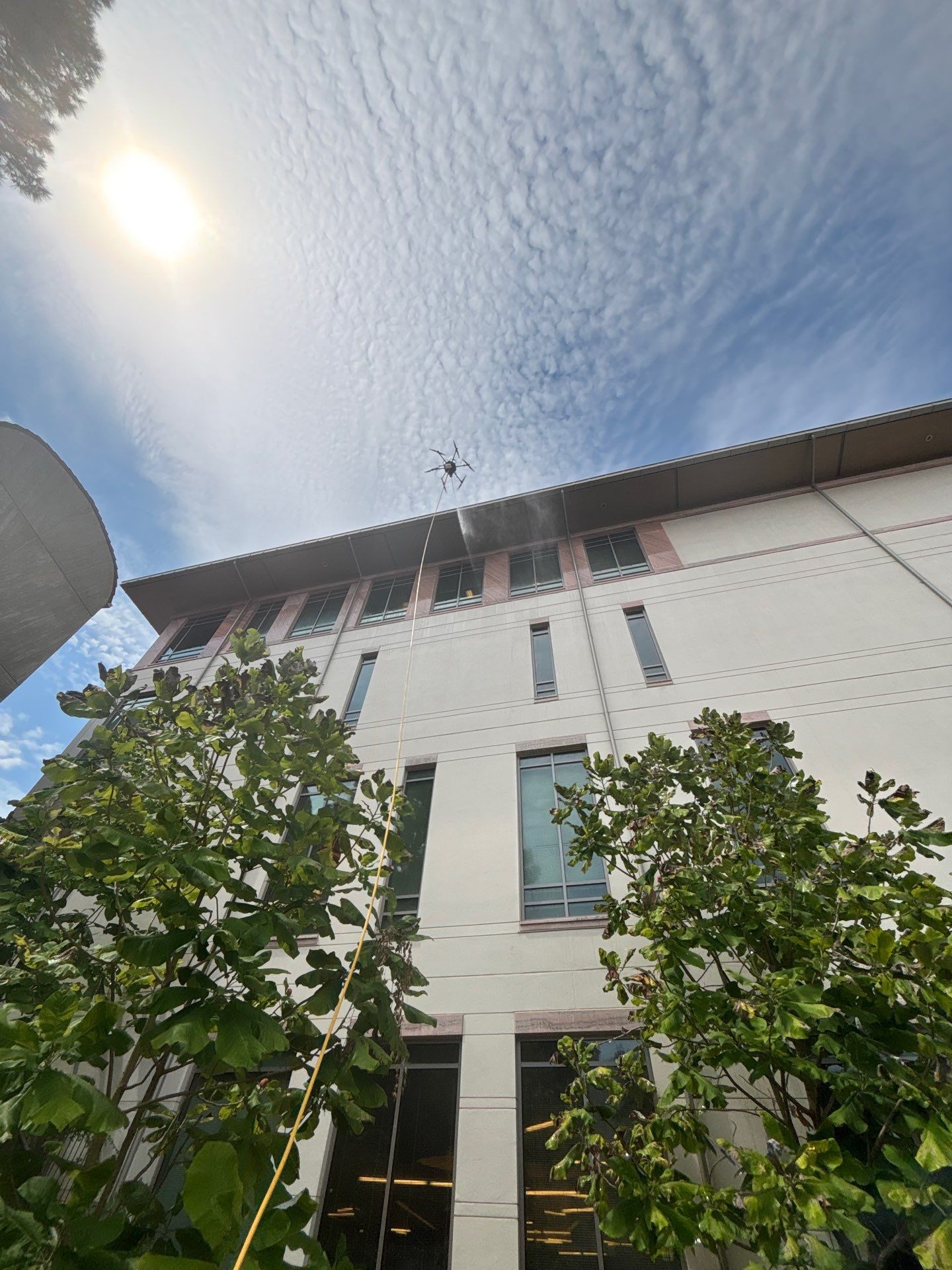
Training paths
Choose the training path that matches the operator.
Training should connect the job, the system, the quote, and the outcome.
Field readiness curriculum
Training should build judgment, not just stick time.
A drone cleaning operator needs to understand the work on the ground and in the air. Flight skill matters, but the job succeeds through setup discipline, water management, chemistry judgment, site control, and finishing standards.
Commercial readiness
Good training connects the job, the quote, and the outcome.
The goal is not to create a pilot who can spray water. The goal is to create an operator who can review a building, explain the method, prepare the system, protect safety, and deliver a professional result.
Training outcomes
A trained operator should leave with repeatable decisions.
Useful training produces a person who can review a site, prepare the system, fly within limits, manage water and hose, communicate with the customer, and know when the drone should not be used.
Training plan
Train around the first work you plan to sell.
A startup operator, a window cleaning company, a solar maintenance route, and a commercial service partner do not need the same first training emphasis.
Next step
Pair the training plan with the system plan.
The operator should know why every component is in the build and how to run it under real job conditions.