Resource
Chemistry should be controlled, not guessed.
Softwash equipment, chemistry control, dwell time, rinse strategy, and field-safe cleaning decisions.
Built from field experience
Real jobs, not hype
Drone, waterfed, skid, chemistry, and traditional tools
Operator context
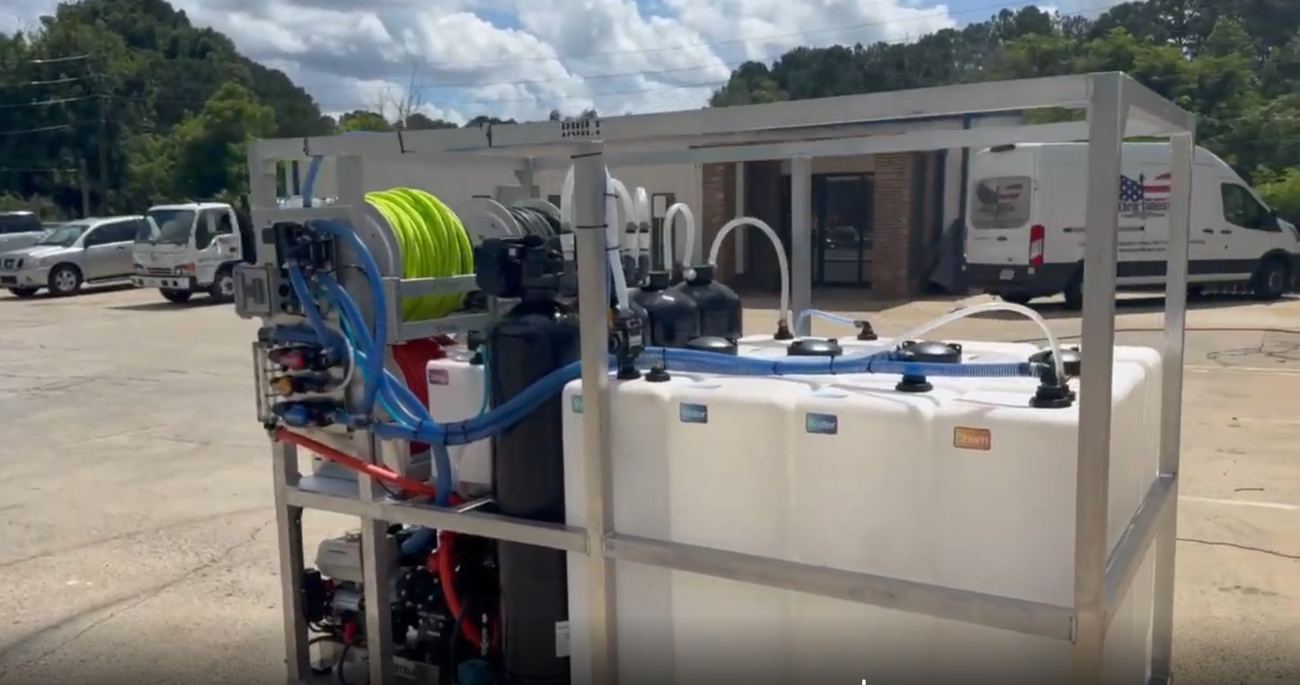
Softwash Equipment and Chemistry Support
The right chemistry path depends on surface, soil load, runoff, dwell time, safety, and finish expectation. The point is practical control, not stronger mix for the sake of it.
Softwash and drone interface
Chemistry makes the method more powerful and more sensitive.
Softwash equipment can support drone workflows, but aerial chemical application needs stronger judgment around dilution, drift, dwell time, runoff, surface compatibility, and local requirements.
Softwash interface
Softwash decisions start with chemistry control.
Drone cleaning and softwash work overlap only when product selection, metering, surface compatibility, runoff, and local operating rules are already understood.
Field setup
Softwash systems need predictable delivery.
A strong setup lets the operator meter product, flush lines, rinse equipment, protect landscaping, and switch methods without guessing.
Softwash checklist
Control the chemical path from tank to runoff.
Softwash equipment should be reviewed as a whole path: storage, metering, hose, nozzle, application, dwell, rinse, neutralization, flushing, and documentation.
Next step
Choose softwash gear only after method review.
The right softwash setup depends on the surfaces, chemistry, local rules, and whether drone-supported application belongs in the job at all.