Equipment list

The drone is only one part of the kit.

A field-built list of drone cleaning systems, skids, filtration, chemistry, waterfed tools, squeegees, parts, and supplies.

Built from field experience Real jobs, not hype Drone, waterfed, skid, chemistry, and traditional tools
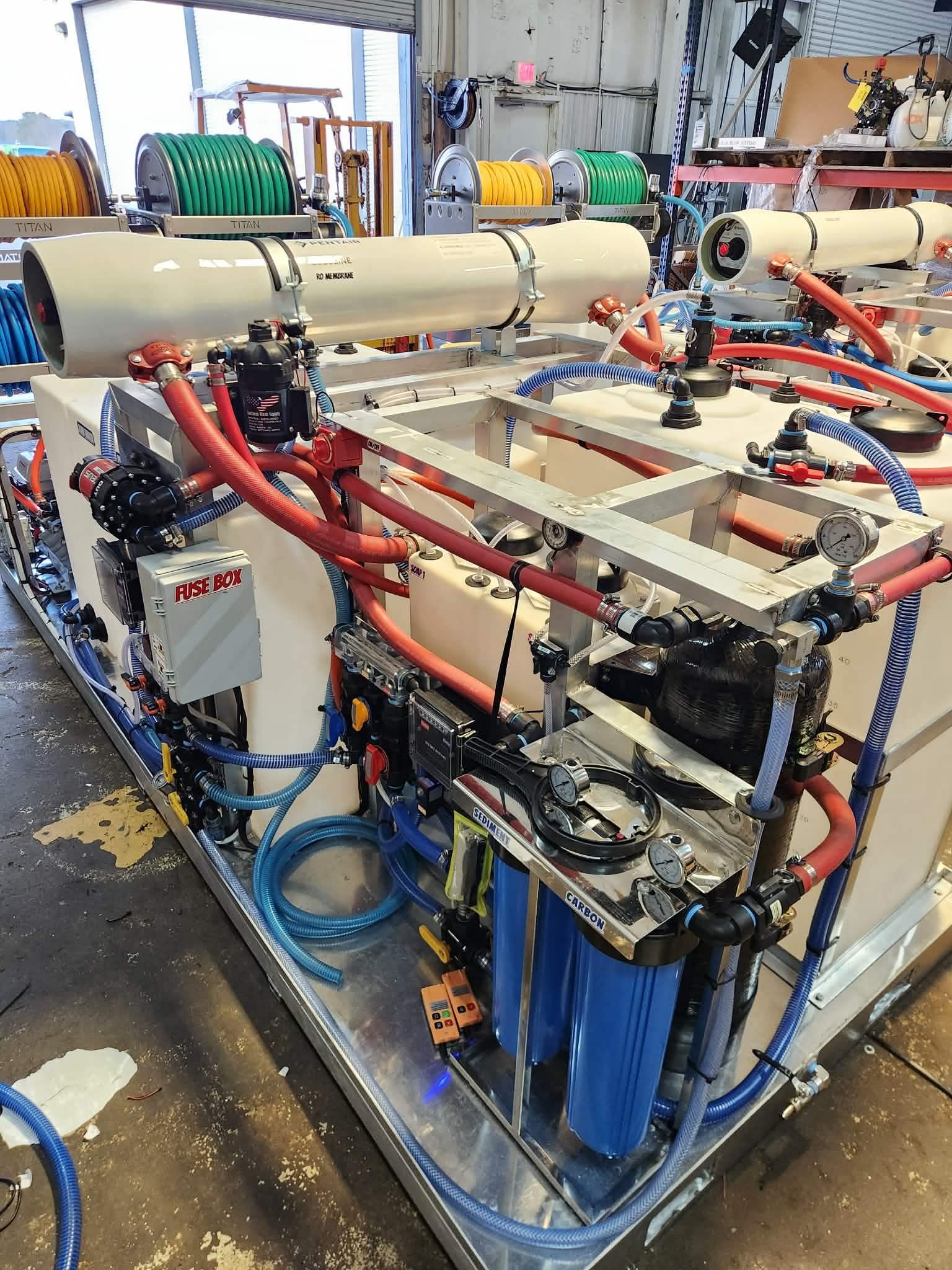
Field-built exterior cleaning system
Complete kitBuy the workflow, not isolated parts.Core stack: aircraft, pump, tank or water source, filtration, reels, hose, fittings, spares, PPE, finish tools, chemistry handling, and training.
Finish qualityTraditional tools still protect the result.Do not skip: waterfed poles, brushes, squeegees, pads, detail tools, and ground-level equipment for edges, frames, and first-floor work.
Buying logicMatch the list to your first profitable job type.Different routes need different builds: solar, commercial glass, campuses, warehouses, roofs, and facades change water demand and staffing.

Equipment architecture

A complete system is more than the drone.

The strongest equipment page answers what each part does, who it is for, what it is not for, and what support gear is required. Buyers should be able to compare systems by workflow, not just product name.

Aircraft and payloadDelivery platform and control.Match the drone, payload, spray pattern, stability, serviceability, and operating limits to the job type and support system.
Skid and waterProduction backbone.Tanks, pumps, RO/DI, DI, reels, manifolds, filters, and fittings decide how long the operator can work and how consistent the result will be.
Finishing toolsThe trade still matters.Waterfed poles, brushes, squeegees, pads, detail tools, and traditional cleaning supplies protect the final outcome when the drone reaches its limit.

Buying checklist

Before buying, answer these questions.

Clear answers prevent expensive mismatches and make product pages more useful for both human buyers and AI search systems.

Best forWhat job does this equipment support?Commercial glass, facades, solar, softwash support, roof work, waterfed work, or a mixed exterior cleaning business all require different setups.
Not forWhere should this system not be used?Every product family should explain limitations: surface sensitivity, water needs, payload limits, training requirements, or finish expectations.
Next stepWhat should the buyer do after comparing?The next step may be training, system planning, service review, partner routing, or shopping a specific equipment family.

Product family comparison

Compare equipment by job outcome.

A serious catalog should help buyers understand what each product family is best for, what it will not solve, and what support equipment is required to make it useful.

Complete systemsBest when you need the aircraft and ground workflow together.Look for matched water delivery, filtration, hose management, training, parts, support, and a clear understanding of target work.
Water and filtrationBest when rinse quality or production is limiting growth.Compare RO/DI capacity, DI resin use, tanks, pumps, TDS testing, refill logistics, and field serviceability.
Training productsBest when the operator is the bottleneck.Training should reduce bad quotes, poor setup habits, unsafe site control, weak finish quality, and uncertainty about when not to fly.
Skid controlsBest when crews need repeatable setup.Manifolds, reels, valves, filters, remotes, and controls help turn a pile of equipment into a reliable field system.
Finishing toolsBest when customer-visible details matter.Waterfed poles, brushes, squeegees, pads, and detailing supplies should be planned into the workflow, not remembered after the drone lands.
Parts and sparesBest when downtime is expensive.Hoses, fittings, seals, filters, batteries, nozzles, pumps, and repair parts protect job schedules and customer trust.

Purchase order logic

Buy in the order that removes the biggest bottleneck.

The best equipment sequence depends on whether the operator is blocked by reach, water quality, flow, training, finishing tools, or field reliability.

If reach is the bottleneckReview aircraft, payload, hose, crew roles, and access limits together.Do not buy: an aircraft without understanding water delivery, staging, wind limits, finish tools, and where the drone hands off.
If finish is the bottleneckReview filtration, brushes, waterfed tools, detail supplies, and process.Do not buy: more reach when the real issue is spots, frames, edges, first cleans, or lack of traditional finish capability.
If uptime is the bottleneckReview spares, fittings, hose, pumps, filters, batteries, and support.Do not buy: add-ons before the crew can keep the existing system running through a paid route.

Next step

Turn the equipment list into a route-ready system.

Use this list as a buying map, then narrow by job type, water source, operator skill, and support needs.