System components

Drone cleaning system components explained

The drone is only one part of the machine. A reliable field setup includes water, filtration, tanks, pumps, hose, reels, chemistry, controls, spares, finishing tools, and trained people.

Drone + skid + waterProduction workflowField serviceability
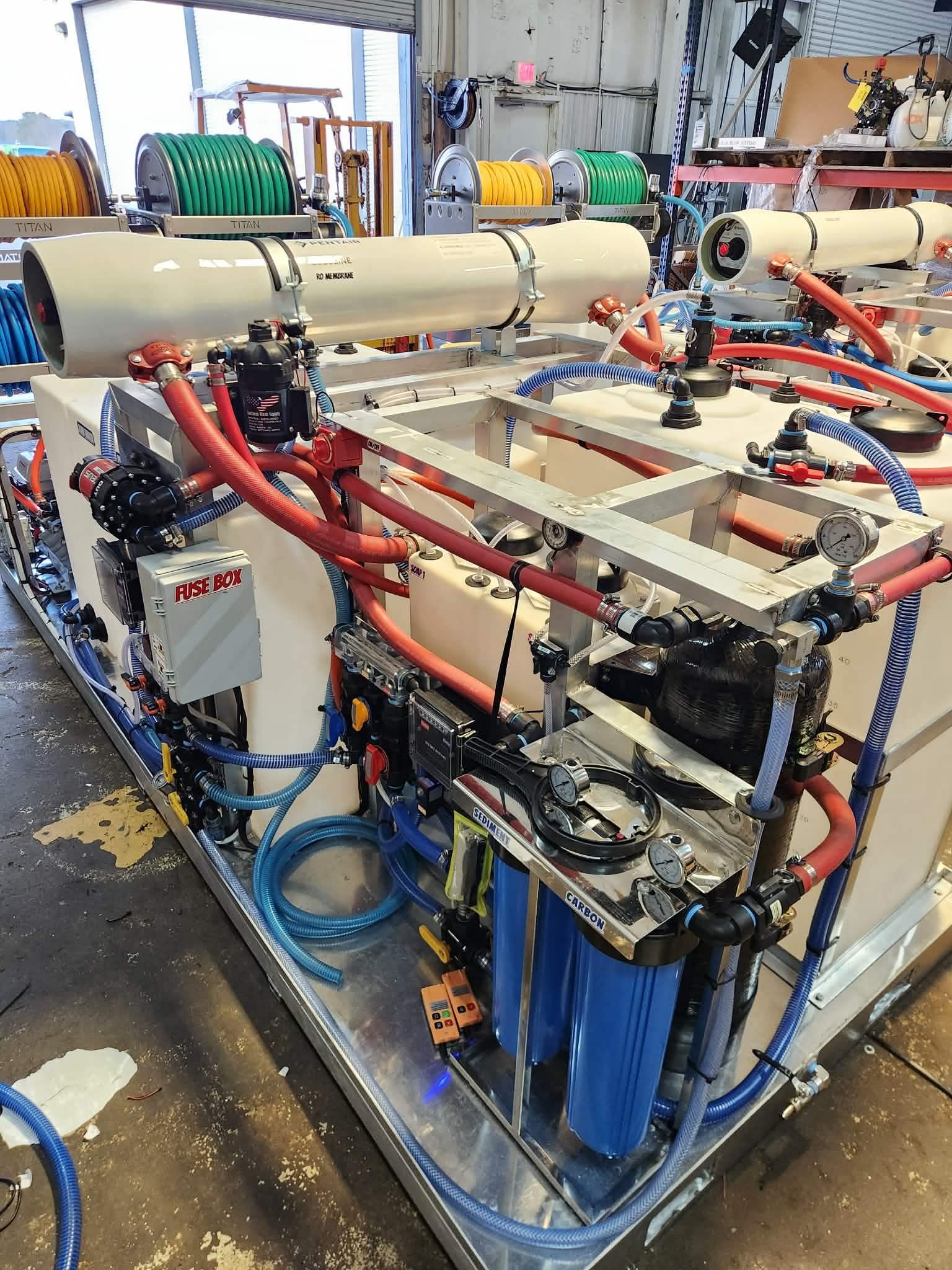
Drone cleaning skid and filtration system components

Core architecture

The aircraft delivers the work. The ground system makes it possible.

Operators who only compare drones miss the real production question: can the system feed the aircraft consistently, maintain quality, manage hose, and recover when field conditions change?

AircraftLift, stability, spray control, serviceability.Match payload, battery cycle, nozzles, controls, and maintenance access to the work you intend to sell.
Water productionRO/DI, DI, tanks, transfer, testing.Pure water work depends on source water, TDS target, production speed, storage, resin life, and refill logistics.
Flow pathPump, manifold, reel, hose, fitting, nozzle.Every restriction affects production. Long hose runs, elevation, fittings, and worn parts can reduce what reaches the aircraft.

Support equipment

The unglamorous parts protect profit.

Most bad days come from ordinary failures: bad water, weak flow, tangled hose, missing fittings, dead batteries, unclear roles, or no detail plan.

Hose and reelsControl distance and drag.Plan hose diameter, length, reel placement, walk path, pinch points, and ground crew communication.
ChemistryControl product, dwell, and runoff.Chemistry should be selected around surface material, soil load, local conditions, and whether aerial application is appropriate.
Finishing toolsBring the trade with you.Waterfed poles, brushes, squeegees, pads, and detailing tools finish what aerial work cannot.

Component checks

Every component should answer a field question.

A complete system is easier to evaluate when each part is tied to a job requirement: reach, rinse quality, flow, chemical control, crew safety, detail work, or repair speed.

AircraftCan it hold position and deliver the tool path safely?Stability, controls, payload, battery cycle, and maintenance access decide whether it belongs on commercial work.
Ground systemCan it feed the aircraft for the whole route?Water production, pump selection, tanks, hose, and reels decide whether production is real.
Support toolsCan the crew finish what the aircraft cannot?Waterfed poles, brushes, squeegees, pads, meters, and spares prevent incomplete jobs.

Failure points

Design for leaks, clogs, dead batteries, and weak flow.

Field reliability comes from knowing what commonly fails and making those parts easy to inspect, isolate, repair, or replace.

WaterTDS creep, clogged filters, low pressure, and refill delay.Test and log water quality instead of finding spotting after the job.
HoseKinks, drag, reel placement, abrasion, and fittings.A poor hose path can turn a good aircraft into a slow system.
PeopleUnclear roles, poor communication, and weak stop conditions.Training should define who watches the aircraft, water, public area, and finish quality.

Build logic

Design the system around the work it must repeat.

A system for small maintenance routes does not need the same storage, filtration, chemical handling, or crew layout as a commercial facade route or a solar cleaning route.

Pure water lanePrioritize water quality, resin life, production rate, and spotting control.Watch: source TDS, RO/DI sizing, DI polish capacity, tank volume, meter placement, and final rinse expectations.
Softwash lanePrioritize chemical compatibility, dwell control, rinse plan, and containment.Watch: surfaces, landscaping, runoff path, product storage, metering, PPE, and whether aerial application is the right method.
Commercial route lanePrioritize uptime, hose handling, spare parts, and crew communication.Watch: reel placement, fitting standardization, battery rotation, field repairs, stop conditions, and quality-control photos.

Next step

Compare components by job fit, not catalog specs alone.

The right build should explain what each component does in the field and what failure it prevents.