Skids

The skid decides whether the drone can keep working.

How to think about drone cleaning skids, water flow, tanks, pumps, reels, DI filtration, and field serviceability.

Built from field experience Real jobs, not hype Drone, waterfed, skid, chemistry, and traditional tools
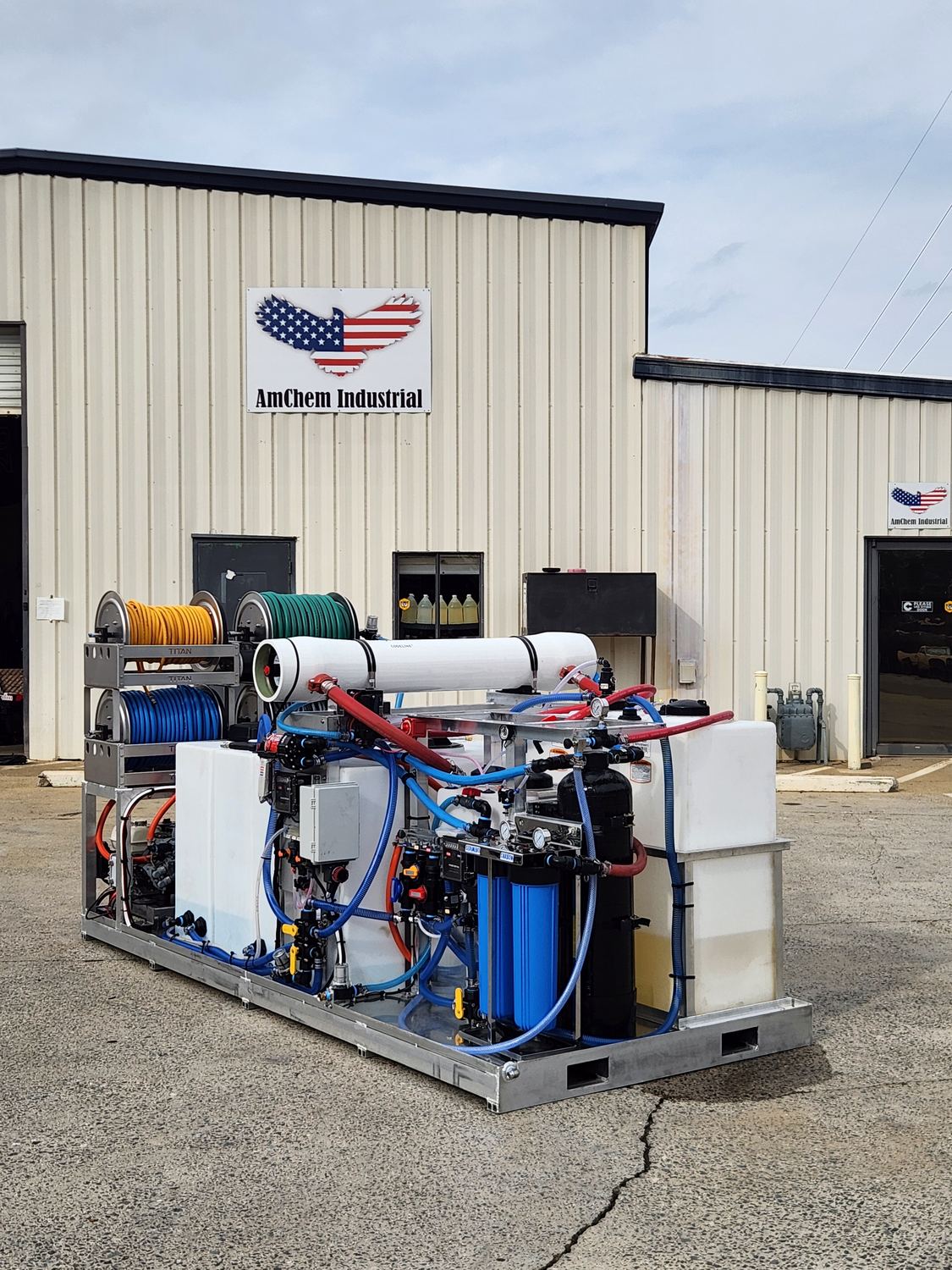
Field-built exterior cleaning system
Flow firstMany drone cleaning problems are water-system problems.Watch: flow, pressure, hose length, filtration speed, tank capacity, pump duty, reel placement, and elevation loss.
Field serviceA skid should be fixable while the job is live.Look for: reachable valves, known fittings, spare strategy, clear flow paths, drains, meters, and parts that can be replaced without guessing.
Build pathCompact and commercial skids should not share the same assumptions.Next step: size the skid around target work, crew size, water source, refills, hose runs, and whether waterfed tools share the system.

Skid architecture

A drone cleaning skid is the production backbone.

The skid connects water, filtration, pressure, hose, reels, chemistry, and field controls. A weak skid makes even a strong drone frustrating to use.

Water storageTank size should match job duration.Plan gallons around surface area, rinse expectations, refill access, crew pace, and whether waterfed tools share the system.
Pumps and controlsReliable flow matters more than peak specs.The operator needs stable output at working distance with valves, filters, controls, and service points that can be managed in the field.
Reels and hoseHose handling is a workflow problem.Reel location, hose diameter, walk path, drag, pinch points, and communication affect flight smoothness and crew fatigue.

Skid decisions

The skid is the production backbone.

A drone cleaning skid has to deliver water, pressure, flow, filtration, storage, and control in a way that fits the jobs the operator is trying to sell.

Core functionFeed the aircraft consistently through real hose runs.Flow loss, elevation, fittings, and reel placement matter more than a clean catalog photo.
Water planningTank size, refill speed, filtration, and TDS testing drive uptime.A crew that outruns its water system will lose the day to waiting and rework.
Bad buyA skid that cannot be serviced or adapted in the field.Locked-in layouts, mystery parts, and no spare strategy become expensive when a job is live.

Build criteria

A skid should be judged by what happens on a bad day.

The right build gives the crew clean access to valves, pumps, filters, reels, drains, meters, and emergency shutoff points.

ServiceabilityCan the crew reach the part that failed?Service access saves jobs when pumps, fittings, meters, or hose connections act up.
ModularityCan the system grow with new work?Operators may add DI, RO, chemistry support, larger reels, or different aircraft as the route matures.
TrainingCan the crew explain each valve and flow path?A skid is not field-ready until the operator understands how water moves through it.

Sizing questions

Size the skid from the route backward.

The cleanest skid plan starts with the jobs you expect to repeat: square footage, water source, distance from truck, crew size, finish standard, and whether the same rig must support drone, waterfed, or softwash work.

Water demandHow many gallons are needed before refill becomes the bottleneck?Check: rinse rate, dwell plan, expected production window, transfer speed, tank size, and whether the site offers usable water.
Hose demandHow far can the system work without choking flow?Check: hose diameter, reel friction, elevation, quick connects, nozzle selection, and whether the ground crew can manage drag safely.
Service demandCan a failed part be isolated fast?Check: bypasses, valves, drain points, spare fittings, pump access, meter location, and clear labels for operators who did not build the skid.

Next step

Build the skid around real production, not a photo.

If you know your target work, Drones on the Fly can help map the skid, filtration, reels, hose, and support tools around that workflow.