Resource

Waterfed tools still belong in the system.

Waterfed poles, DI filtration, brushes, hose management, and method fit for commercial exterior cleaners.

Built from field experience Real jobs, not hype Drone, waterfed, skid, chemistry, and traditional tools
Field-built exterior cleaning system

Operator context

Waterfed Pole Equipment for Commercial Window Cleaning

Waterfed systems can be the right answer for lower and mid-height work, detail zones, and glass that needs close control. Drone cleaning does not replace this category. Serious operators understand both.

FitMatch the method to the job.Waterfed pole fit depends on glass height, brush contact, TDS, rinse behavior, operator control, and whether detail work is expected.
SystemThink in complete systems.A pole setup needs the right length, stiffness, brush, hose path, filtration, meters, and traditional finish tools.
Next stepUse the right buying path.Use this page to choose pole equipment as part of a complete exterior cleaning system, not as an isolated purchase.

Waterfed handoff

Waterfed poles are not replaced by drones; they complete the workflow.

A drone can improve reach and production, but waterfed equipment often protects edges, frames, entrances, lower elevations, and customer-visible details.

Best handoffEdges, frames, and first-floor detail.Use waterfed tools where close brush contact and operator control improve the final result.
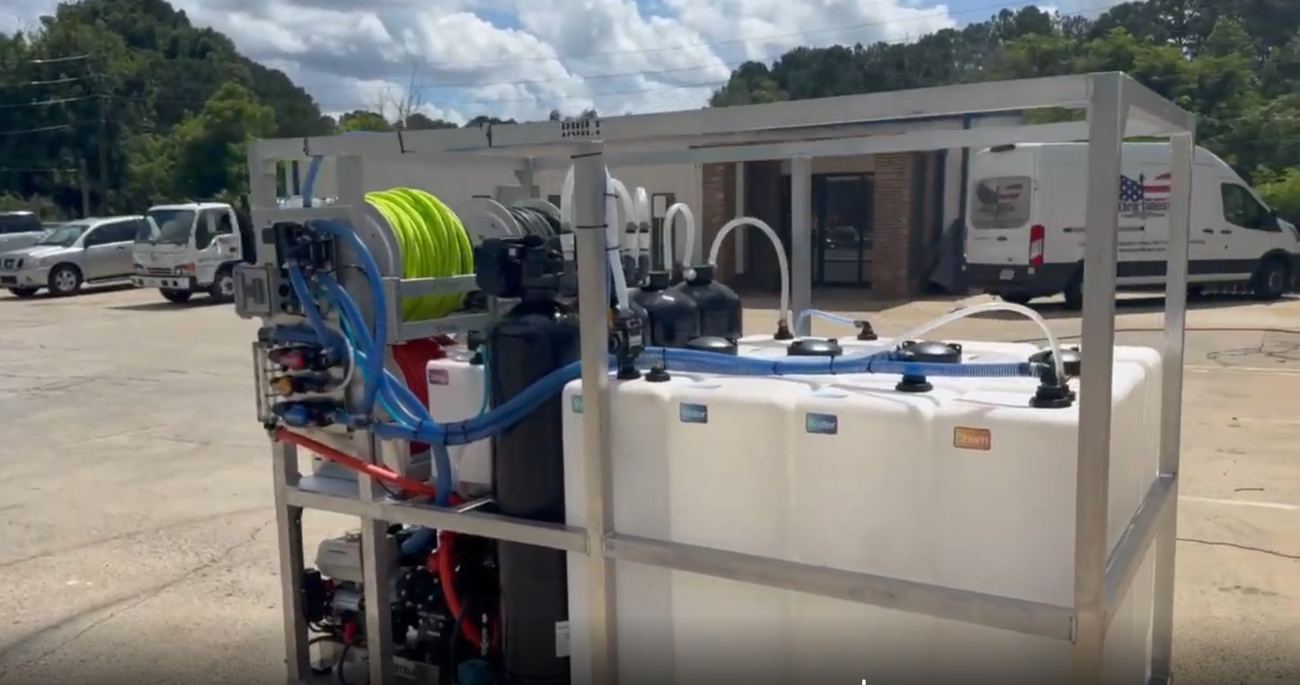
Shared waterPlan filtration for both methods.If the drone and poles share pure water, the system must support both flow demands without compromising finish quality.
Sales clarityExplain hybrid work as quality control.Customers should hear that hybrid work is a professional recommendation, not a fallback.

Waterfed role

Poles are not backup tools. They are part of the production method.

Waterfed poles handle edges, entrances, lower elevations, frames, and detail zones that aerial cleaning may not finish to a commercial standard.

Best useGlass, frames, signage zones, entrances, and touch-up work.Use poles where brush contact, operator feel, and close visual inspection improve the result.
Water qualityTDS, resin life, flow rate, and spotting risk decide quality.Pure-water performance is not magic. Test source water, verify resin condition, and confirm rinse behavior before promising results.
LimitDo not force poles where access, angle, or soil load makes them inefficient.Some high or awkward surfaces need drone support, lift access, or another method rather than heroic pole work.

Buying notes

Choose pole gear around stiffness, brush match, and hose control.

Cheap pole setups can look acceptable on paper and still waste labor when flex, weight, or poor hose routing slows every pass.

Pole selectionMatch length to real working height, not maximum catalog reach.A pole used all day must be controllable, not just technically long enough.
Brush choiceSoft, flagged, boar blend, or specialty brushes change agitation.The brush should match the surface and soil, especially on glass, frames, solar edges, and coated panels.
Hose pathPlan pole hose, reel hose, and foot traffic as one system.The job feels professional when water movement does not create snags, trip points, or wasted steps.

Pole setup checklist

Waterfed performance depends on water, brush, and control.

A waterfed pole system should be selected around daily working height, glass condition, source water, hose path, and the amount of detail work the route requires.

WaterConfirm source TDS and filtration capacity before promising spot-free results.Check: DI or RO/DI choice, resin life, meter location, rinse volume, and whether the system feeds drone work too.
BrushMatch agitation to the surface and soil load.Check: bristle type, rinse bar, pencil jets, fan jets, frames, oxidation, hydrophobic glass, and solar or coated surface compatibility.
ControlChoose a pole that can be used well, not just extended far.Check: stiffness, weight, clamp quality, operator fatigue, angle, wind, hose drag, and real working height.

Next step

Build waterfed tools into the whole cleaning system.

Waterfed equipment is often the quality-control partner for drone-supported work, especially on glass, entrances, edges, frames, and first-floor detail.